
Argentina to Take a Leading Role at the World’s Most Influential Bulk Wine Fair

Wines from Argentina will once again be present at the World Bulk Wine Exhibition (WBWE), the most influential international meeting for the bulk wine trade. The fair will take place in Amsterdam on 24 and 25 November
Cabernet Sauvignon is the second most exported red variety in bulk wine

During Cabernet Sauvignon´s Day around the world, the Argentine Bulk Wine Chamber explains the importance of this varietal in exports. On the last Thursday of August, the world celebrates the quality of the ‘king of reds’, Cabernet Sauvignon.This variety, present in 17 wine-producing provinces in Argentina, represents 6.4% of the country’s total vineyards, with a total of 13,000 hectares cultivated, according to the latest data from the National Institute of Vitiviniculture in 2024.It is the fourth most widely grown variety in Argentina after Malbec, Cereza and Bonarda. The province of Mendoza has the largest amount of Cabernet Sauvignon in the country, reaching 9,988 hectares (76.8%) in 2024, followed by San Juan with 1,146 hectares (8.8%) and the rest of the provinces with 1,872 hectares (14.4%).Cabernet Sauvignon is one of the most highly prized red varieties in the world. Its role in bulk wineIn the ‘bulk wine’ category, Cabernet Sauvignon is the second most exported red variety, behind Malbec, and the third most exported variety overall. Last year, 1 million litres of Cabernet Sauvignon were exported in bulk, accounting for 2.5% of total exports.The most important destination countries for Cabernet Sauvignon exported in bulk are: the United Kingdom (29%), the United States (27%) and Canada (21%). Features that make Argentine Cabernet Sauvignon unique‘Argentine Cabernet Sauvignon is gaining more and more recognition,’ says José Bartolucci, president of the Argentine Bulk Wine Chamber. From his experience as an exporter, he explains that Cabernet Sauvignons from Mendoza, especially those from areas such as Agrelo, Perdriel and the Uco Valley, are highly prized by international buyers for their quality.In terms of regions, Cabernet from the Calchaquí Valleys (Salta) has a unique character, with herbal and spicy aromas that stand out at high altitudes. What sets Argentine Cabernet apart from other is its lower level of herbaceous notes (such as the classic green pepper) and a more pronounced fruity character, thanks to the continental climate and the wide temperature range of the country’s wine-growing regions. This results in wines with ripe, sweet tannins and spectacular balance. In bulk form, Argentine Cabernet Sauvignon is at its best, offering options ranging from affordable wines to high-end examples that compete with the best in the world. “Cabernet Sauvignon is a globally recognised grape variety and highly demanded,” he added.
Argentina in the global bulk wine market concert: the highs and lows of a business that trades large volumes of wine

Global wine trade moves around 10 billion liters per year, in all formats: bottled, bag-in-box, and bulk.
Chardonnay: A Comprehensive Analysis of its Significance in Bulk Wine Exports

This week, the global wine community celebrates the esteemed Chardonnay varietal. While some specialized sources designate May 22nd for this observance, others mark May 29th. In Argentina, Chardonnay holds a significant position within bulk wine exports. The varietal is renowned for its exceptional adaptability to diverse terroirs and climatic conditions. Burgundy, Chablis, and Champagne are globally recognized for their distinguished Chardonnay cultivation. In California, Chardonnay maintains a prominent role, while in Australia, the Yarra Valley and Adelaide Hills regions yield Chardonnay wines exhibiting distinctive characteristics. According to data published by the National Institute of Vitiviniculture in 2024, Argentina cultivates 5,542 hectares of Chardonnay, representing 2.8% of the country’s total vineyard area and 17% of the total white varietals designated for winemaking. Generally, Chardonnay wines are highly expressive aromatically. In Argentina, the most characteristic aromas are those of ripe tropical fruits, including melon, banana, pineapple, and passionfruit. However, dependent on the specific region and harvest timing, Chardonnay can also present delicate citrus notes, such as grapefruit, and floral undertones associated with stone fruits like apricot or peach. Upon oak integration, typical barrel-aged Chardonnays can develop substantial body with a creamy texture. Barrel aging imparts nuances of vanilla and smoky notes. This varietal unequivocally demonstrates a notable capacity for aging. The Importance of Chardonnay in Bulk Wine Exports Considering both bottled and bulk formats, Chardonnay stands as Argentina’s most exported white varietal. Focusing specifically on bulk exports, Chardonnay ranks sixth overall, with 702,000 liters exported in 2024. In comparison to other white wines exported from Argentina, Chardonnay accounts for 21% of the total export volume, positioned directly behind Torrontés Riojano and Pinot Gris. Regarding export destinations in the past year, Japan was the primary importer of Argentine Chardonnay, accounting for 32% of shipments. The United States followed with 18%, while Sweden and Belgium each received 14%, and the United Kingdom imported 11%. Cultivated Area of Chardonnay Grapes in Argentina Chardonnay is present in 17 Argentine provinces; however, Mendoza and San Juan collectively concentrate 93.5% of the total cultivated area. Nationally, Chardonnay ranks as the 9th most cultivated varietal overall and the 3rd among white varietals intended for winemaking, preceded by Pedro Giménez (8,719 ha) and Torrontés Riojano (7,141 ha). Mendoza province holds the largest Chardonnay acreage, reaching 4,591 hectares in 2024 (83.1%), followed by San Juan with 575 hectares (10.4%). Consistent with the trend observed across most white varietals, the cultivated area of Chardonnay in Argentina has decreased by 13% (-828 ha) since 2014. Mendoza experienced a 12.9% reduction, San Juan a 22% reduction, while the remaining provinces collectively saw a 3.7% increase during the same period.

The year-on-year increase was 13.7%. Generic white wines reached 1.6 million liters, following Malbec, marking the bulk wines with the highest growth in foreign shipments.
Argentina’s Malbec grape: A driving force in wine exports

Malbec is the dominant force behind Argentina’s bulk wine exports. An impressive 78% of all varietal wines exported in bulk from Argentina are Malbec, highlighting its global popularity and strong price-to-quality proposition.
Argentine bulk wine will be present at ProWein 2023
ProWein is the most important wine fair in the world and this year it will take place in Düsseldorf, between March 19 and 21. Argentine bulk wines will be promoted by the Argentine Bulk Wine Chamber and four associated companies, which will be present within the WofA pavilion. Other companies associated with the Chamber will also go on their own with their own stands, representing bulk wine from different Argentine areas. “We will have a stand representing the Argentine Bulk Wine Chambers located inside the Wines of Argentina pavilion, thanks to ProMendoza and the four partners who also supported this idea. The stand of the Argentine Bulk Wine Chamber will be made up of two private spaces, which total an area of 18m2, forming the Argentine Bulk Wine . Chamber sector”Juan Manuel Palomo, Manager of the Chamber explainedAs it can be seen in the following image the Argentine Bulk Wine Chamber stand location is:HALL 13, Sector A68, Booth 44: Link to location within the ProWein property: Link The partners that will be present at the Argentine Bulk Wine Chamber stand at ProWein are:● Amadeo Marañón S.A.● Galeano Antonacci G&A S.A.● Juviar S.A.● Kineta S.A.Expectations René Alarcón, Managing Director of Juviar, will take his bulk wines to ProWein where he hopes to establish contact with new clients, while strengthening relationships with importers with whom we have been working for many years.“We seek to reaffirm an international presence in line with our vocation as exporters, ProWine is by far the most important fair for wine globally, where a very high percentage of the players in this industry attend and there we want to publicize the current state of our wine offer and give structure to our program and sales strategy for the season” Regarding the current season for bulk wine, Alarcón remarked that the current harvest presents several challenges, “mainly to be able to maintain a competitive offer of our wines,so as to continue supplying our customers in a stable manner and at reasonable prices.” We are aware that losses are forecasted due to frost and recent weather conditions, as a result, the amount of wine available could decrease. “Therefore, keeping our clients with a sufficient offer and at a good price will be the biggest task,” he said. Kineta, another company that will accompany the Chamber in this edition of the ProWein Fair, has a tradition in the production of grape juices, to which a new wine division has recently been added and will be presented in different markets and with Very good results. Enrique Verazay, spokesman for the company, indicated that Kineta is participating in Prowein 2023 “with great desire and expectations to continue building ties in different parts of the world.”Argentina, in recent years, has been struggling to get a better place in the world bulk concert. “The path is not short, but continuity and commercial respect is showing us that we are on the right path. We believe that the export potential that Argentina has is based on quality and strength of volume,” Verazay pointed out. He also indicated that climate problems, not only in Argentina, but in other parts of the world, have made production very complicated. “The inclement weather in different parts of the world has been making the task not so easy, but I am optimistic that it is possible to continue producing wine as required,” he assured. Although this year’s Argentine harvest could be below average,causing an increase in prices of bulk wines, Bodega Amadeo Marañón’s objective is to meet with clients in person, to reaffirm ties and long-term relationships.
Argentina exports more Premium wine in bulk

According to the analysis of exports carried out by our Chamber in 2022, it came out that Argentine bulk wine shipments have had good price/quality varietal wines as protagonists, being Malbec the predominant.
Argentina continues to export high-quality bulk wine

Although the year 2022 closes with a drop in export volume, the positive fact is that the participation of varietals in the total amount of exported wines continues to increase, growing 21% in relation to the previous year.
Argentina with tes wines amongst the best bulk wines from 2022
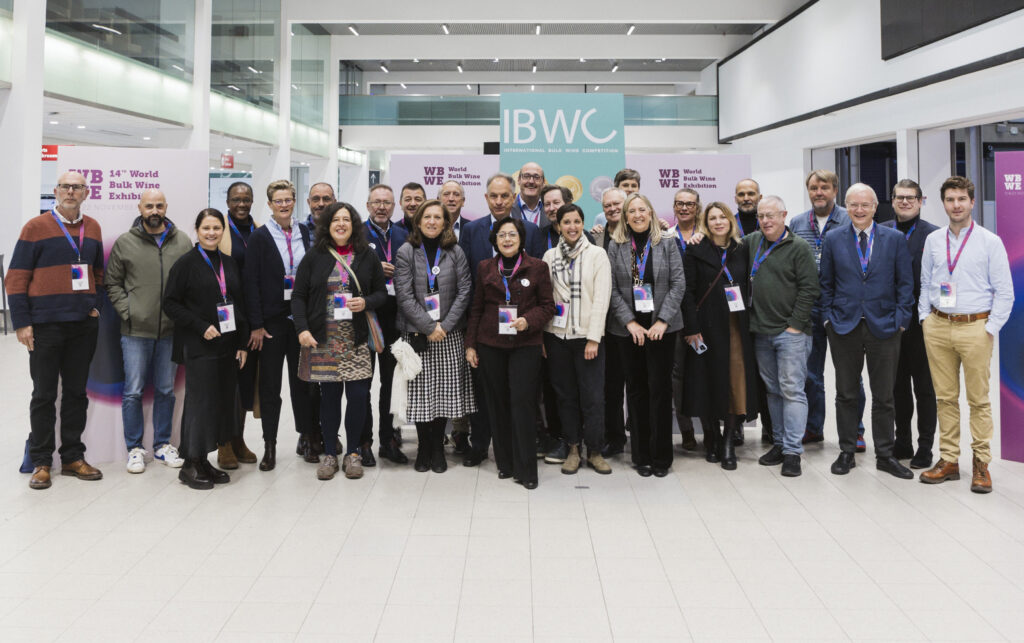
Ten wines of Argentina were awarded at the International Bulk Wine Competition, and unique world contest that recognizes the quality of bulk wine.